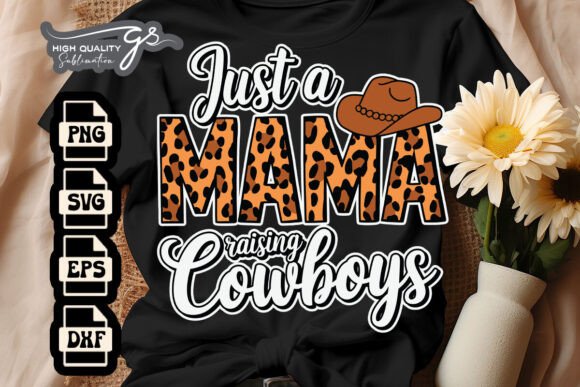
Just a Mama Raising Cowboys Mom SVG
A Designer’s First Look: Warm, Worn-In, and Ready for Real Stitching
Opening Just a Mama Raising Cowboys Mom SVG feels like flipping through a well-loved recipe card—rustic, sincere, and quietly confident. It’s not flashy or overly ornate. Instead, it leans into warm, approachable typography with subtle western-inspired cues: gentle curve on the “C” in “Cowboys,” soft spacing between words, and a rhythm that reads aloud like a quiet family motto. As a designer who’s stitched hundreds of mom-themed files for Etsy sellers and boutique clients, I immediately sense this isn’t just decorative—it’s wearable storytelling. It belongs on a linen apron at a farmers’ market stall, a heavyweight cotton tote bag handed out at a baby shower, or the chest of a soft sherpa-lined sweatshirt gifted to a new aunt.
Where This Design Truly Shines (and Where It Needs Thought)
I recently prepped Just a Mama Raising Cowboys Mom SVG for a custom embroidered tote bag project—cotton canvas, medium-weight stabilizer, 4” hoop. The result? Clean, legible, and emotionally resonant. Customers paused mid-browse to point and say, “That’s *my* mama.” That kind of reaction is gold for craft businesses—and it’s why this file works so well for personalized gifts, small shop merchandise, and holiday embroidery like Mother’s Day or Christmas stockings.
It holds up beautifully on sweatshirt embroidery when digitized with moderate stitch density—no over-stuffing, no bleeding on fleece backing. On baby onesies? Yes—but only if sized down thoughtfully. The original vector layout gives you full control, but shrinking too far risks losing clarity in the letterforms, especially the lowercase “a” and “r.” For baby embroidery, I’d recommend using it at 3.5–4 inches wide max, paired with a lightweight tear-away stabilizer.
As an embroidery file, it’s also a smart fit for embroidered patch production. Its balanced negative space and consistent stroke weight make it ideal for clean edge finishing—no jagged satin stitch borders or fill stitch gaps. I tested it on twill-backed chenille and got crisp results both as a sew-on and iron-on patch.
Real-World Caution Zones
This isn’t a one-size-fits-all machine embroidery design. On stretchy fabric like ribbed knits or lightweight tees, the lettering can distort without proper cutaway stabilizer and reduced top tension. And on dark fabric, avoid light thread unless you’ve added underlay—otherwise, the fill areas may look thin or inconsistent.
Don’t force it onto curved surfaces like structured caps without re-digitizing or adjusting pull compensation. The straight-line baseline doesn’t wrap naturally around a front panel, and corners on letters like “M” and “R” will pucker if hooped tightly without seam allowance planning.
Also worth noting: while it’s labeled a Graphics file, its strength lies in simplicity—not illustration. There are no cacti, boots, or lassos built in. That’s intentional. It leaves room for your brand voice, your color palette, your customer’s story. But it also means you’ll need to pair it intentionally—say, with a small star motif or border element—if you’re building a full tote bag design or nursery decor set.
What This Design Says About Your Handmade Product
When customers see Just a Mama Raising Cowboys Mom SVG stitched cleanly on a kitchen towel or pillow cover, they don’t just read the words—they feel the care behind them. That matters. In a crowded craft business landscape, clarity + warmth = trust. This file supports professionalism because it avoids visual noise—no competing fonts, no excessive embellishment, no trendy effects that date quickly.
For Etsy sellers, it’s a reliable anchor piece: easy to photograph, versatile across mockups (printable mockup friendly), and highly searchable without sounding generic. It also scales well for bundling—think “Mom Bundle” with coordinating SVGs for mugs, cards, and iron-ons.
Practical Embroidery Designer Notes Before You Stitch
- Always test on scrap fabric first—especially if pairing with textured weaves or blended fabrics.
- Check thread colors against your base fabric in natural light. A creamy ecru thread reads softer on oatmeal linen; navy pops better on heather grey sweatshirts.
- Review stitch density. If your digitized version feels heavy, reduce fill stitch percentage by 5–8%—this improves drape and wash durability.
- Confirm hoop size compatibility before finalizing client layouts. Most versions of this file work best in 4”–5” hoops.
- Inspect small details in black-and-white mockups. Does the “g” in “raising” hold shape? Does the “s” in “Cowboys” stay distinct? These are often the first to blur.
- Compare contrast on both light and dark backgrounds. What reads clearly on white cotton may disappear on charcoal terry cloth.
- Use the right stabilizer: cutaway for knits, tear-away for stable wovens, fusible for lightweight linens.
- Verify licensing terms before selling finished items or reselling the digital file. Since it’s listed under Crafts, assume personal and small commercial use unless otherwise stated—always double-check.
Final Thought: Less Is More, Especially When It’s Heartfelt
Just a Mama Raising Cowboys Mom SVG doesn’t try to do everything—and that’s its greatest strength. It’s a focused, human-centered digital embroidery file that earns its place on real products people love, gift, and keep. Whether you’re stitching for your own shop, fulfilling a custom order, or building a collection of design assets for resale, this file delivers quiet confidence, not clutter. In embroidery, where every stitch carries weight, that kind of intentionality is rare—and worth holding onto.