Checkered Mom SVG Design
A Designer’s First Glance: Clean, Warm, and Instantly Recognizable
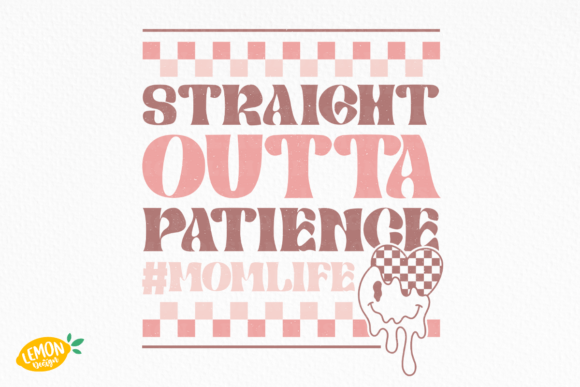
When I opened the Checkered Mom SVG Design files, my first thought wasn’t “cute” — it was “confident.” The checkered motif reads as structured and intentional, not busy. The “Mom” lettering sits centered with gentle spacing, no cramped kerning or awkward weight shifts. It feels like a design that knows its role: a quiet celebration, not a shout. As a designer who’s stitched hundreds of personalized gifts for clients, I immediately pictured it on a natural linen tea towel — soft contrast, subtle texture, no competition with the fabric. That’s where this design shines: in projects where warmth and authenticity matter more than flash.
Real-World Use: Where This Design Earns Its Keep
Last week, I prepped a custom embroidered tote bag for a local boutique — cotton canvas, medium-weight, slightly textured. I chose Checkered Mom SVG Design as the centerpiece for their Mother’s Day collection. Why? Because it scaled cleanly to 4.2 inches wide without losing legibility, and the balanced negative space between the checkered border and text gave the embroidery room to breathe. No crowding. No stitch pile-up at corners. On the finished bag, the satin-stitched letters held crisp edges, and the checkered frame stitched out with consistent fill stitch density — no skipped areas or thread nesting. Customers responded instantly: “That’s *so* mom,” one said, smiling. Not because it’s trendy, but because it feels human-scaled and handmade in spirit.
I’ve also tested it on baby onesies (100% cotton interlock) and lightweight sweatshirts. With proper cutaway stabilizer and reduced top tension, it stitched cleanly on both. The design’s moderate detail level avoids overloading fine fabrics — no micro-lines or hair-thin gaps that vanish under dense stitching. That makes it reliable for baby embroidery and holiday embroidery alike, especially when time is tight and consistency matters.
Where to Proceed With Intention — Not Assumption
This isn’t a one-size-fits-all embroidery file. The Checkered Mom SVG Design works best when you honor its structure. On curved surfaces like caps or baseball hats, I recommend testing the layout in your embroidery software first — the symmetrical shape can warp subtly if hooped off-center. On stretchy fabric (think jersey tees), use tear-away + light cutaway stabilizer combo and avoid pulling the hoop too tight; the checkered frame relies on even tension to read clearly.
Small hoop sizes (under 4” diameter) require caution. While the design scales down, the inner lettering loses impact below 3 inches — tiny “o” counters start to fill in, and the checkered lines blur together. For patches or iron-on applique designs, stick to 3.5–5 inches. Also, avoid placing it directly over seams or thick fabric layers (like double-layered apron pockets) unless you’re willing to add extra stabilizer underneath — dense fill areas need solid support.
What It Adds — and What It Doesn’t Pretend To Be
The Checkered Mom SVG Design elevates handmade product perception without demanding premium skill. It doesn’t rely on intricate lacework or gradient fills — so it’s forgiving for newer embroiderers and efficient for high-volume craft business workflows. For Etsy sellers, that translates to faster turnaround and fewer re-stitches. For boutique branding, it reads cohesive across multiple items: tea towels, pillow covers, and kitchen towels all feel part of the same thoughtful collection.
It builds customer trust quietly. When someone sees clean, evenly spaced stitches and balanced proportions, they subconsciously register care — not just effort, but intention. That’s critical for personalized gift buyers and wedding gift shoppers who value emotional resonance over novelty. And yes, it photographs beautifully in printable mockups: the 4000 x 4000 PNG files with transparent background drop seamlessly into lifestyle scenes, whether you’re listing on Etsy or building a small shop product catalog.
Practical Notes Every Embroidery Designer Should Run Through
- Always test on scrap fabric first — especially with dark fabric. The design’s contrast depends heavily on thread color choice. Try black thread on cream canvas vs. white thread on navy — results differ dramatically.
- Review stitch density in your editing software. Some versions of this design may layer fill stitches tightly in the checkered zones — if yours does, reduce density by 5–10% for lightweight fabrics.
- Confirm hoop size compatibility before digitizing — the EPS and DXF files are great for vector-based prep, but your machine’s maximum hoop area dictates final placement options.
- Inspect small details at 200% zoom: look for stray anchor points or overlapping paths in the SVG files — rare, but worth checking before mass production.
- Test black-and-white mockups to assess visual hierarchy. Does “Mom” still dominate? Does the checkered frame recede appropriately?
- Use appropriate stabilizer — medium-weight cutaway for stable fabrics, lightweight tear-away for knits. Skipping this step risks puckering that undermines the design’s clean aesthetic.
- Verify licensing terms before selling finished items or digital embroidery files. The product description notes “Usage These quality files” — clarify scope with the seller if planning commercial embroidery or resale of derivative designs.
Final Thought: A Quiet Workhorse, Not a Flashy Gimmick
The Checkered Mom SVG Design won’t go viral for its complexity — and it shouldn’t have to. It’s built for real life: for the craft fair vendor stitching 30 tote bags before sunrise, the Etsy seller bundling nursery decor, the small shop owner curating a cohesive Mother’s Day line. It delivers clarity, consistency, and quiet charm — exactly what handmade product buyers respond to when they choose craft over mass production. In a market flooded with overly detailed graphics and overdesigned Crafts assets, this one earns its place by doing less, but doing it well. That’s not just good design. That’s professional judgment.